
INTRO: Quién soy.
Mi nombre es Su Eaton, soy del Reino Unido y he trabajado como artista, intérprete, músico y titiritero con mi compañero Martin Bridle, desde que dejamos Art College en 1979. Nos llamamos Hand to Mouth Theatre y comenzamos nuestra existencia «al día» tocando en la calle con nuestro espectáculo Punch and Judy en las playas del sureste de Inglaterra. Este espectáculo de estilo tradicional ha permanecido en nuestro repertorio desde entonces, aunque ahora es una parte muy pequeña de lo que hacemos.
Estos son mis pensamientos sobre ser parte de un espectáculo de títeres de estilo tradicional, en particular como una mujer que actúa en un tipo de comedia más comúnmente masculina.
Primero definiré el término ‘slapstick’, luego discutiré la tradición británica Punch and Judy, antes de hablar sobre mi experiencia como intérprete.
¿Qué es Slapstick?
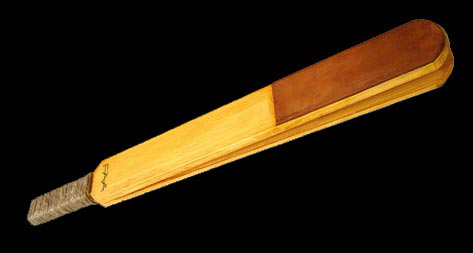
El slapstick es un palo hecho de dos tiras de madera que hace un fuerte ruido de golpe cuando golpea, de modo que un ligero golpe parece una bofetada contundente y cómica. Se utiliza con un efecto cómico exagerado en el tradicional espectáculo de marionetas Punch and Judy.
Slapstick Comedy o Slapstick Humor describe un estilo de comedia, que es visual, físico y exagerado, y lleva el nombre de este palo. A menudo muestra violencia y contratiempos que serían desastrosos en la vida real, pero cuando se presentan de una manera tan extravagante, tonta y poco realista, se vuelven divertidos.
¿Qué es un programa de Punch & Judy?
El espectáculo Punch & Judy es un entretenimiento británico popular: un espectáculo de títeres de guante sobre un personaje perezoso y embaucador llamado Mr. Punch, que usa su payasada y trucos para frustrar a los diversos personajes que intentan evitar que haga lo que quiere. A lo largo de los siglos, diferentes personajes han ido y venido, pero en estos días un espectáculo generalmente presenta a su esposa, Judy, y al bebé (responsabilidad), un policía (autoridad), un fantasma (muerte), el diablo (religión) y algo extraño un cocodrilo. Los interludios musicales y de títeres novedosos, y los personajes de actualidad, a menudo también forman parte del espectáculo.
Se cree que es una combinación de los espectáculos itinerantes de marionetas de la Commedia del Arte italiana y los tradicionales espectáculos de títeres de guante ingleses que se hicieron populares en las calles cuando los teatros cerraron a mediados del siglo XVII. El nombre de Punch es una versión abreviada y abreviada del italiano Pulcinella: primero Punchinella, luego Punch.
El Sr. Punch habla tradicionalmente a través de una caña chirriante que el showman tiene en la boca, que se llama swazzle, al igual que el títere de guante italiano Pulcinella.
El cronista Samuel Pepys describió haber visto un espectáculo en el mercado de Covent Garden, Londres, el 9 de mayo de 1662, por lo que se considera que es el cumpleaños del Sr. Punch y los artistas se reúnen anualmente para conmemorarlo.
Ilustraciones:
Espectáculo de títeres de guante medieval
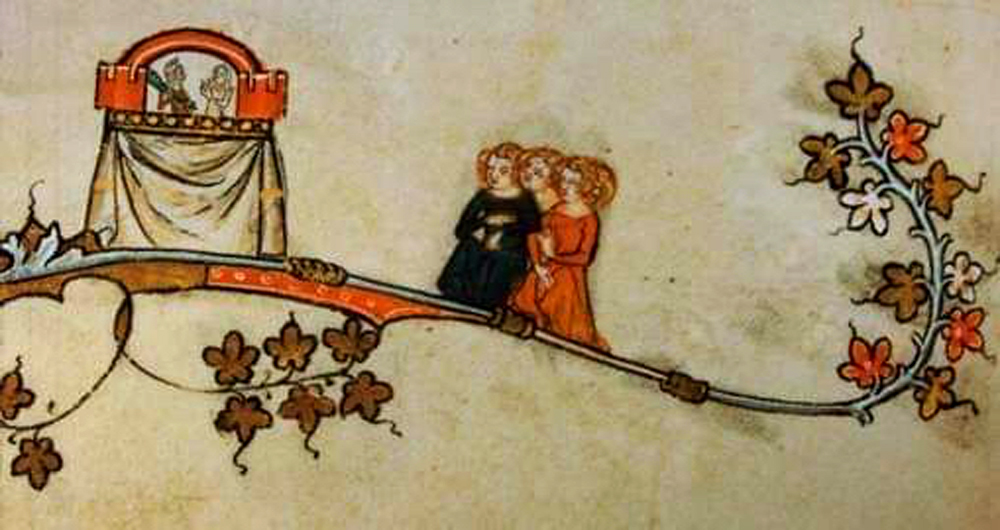
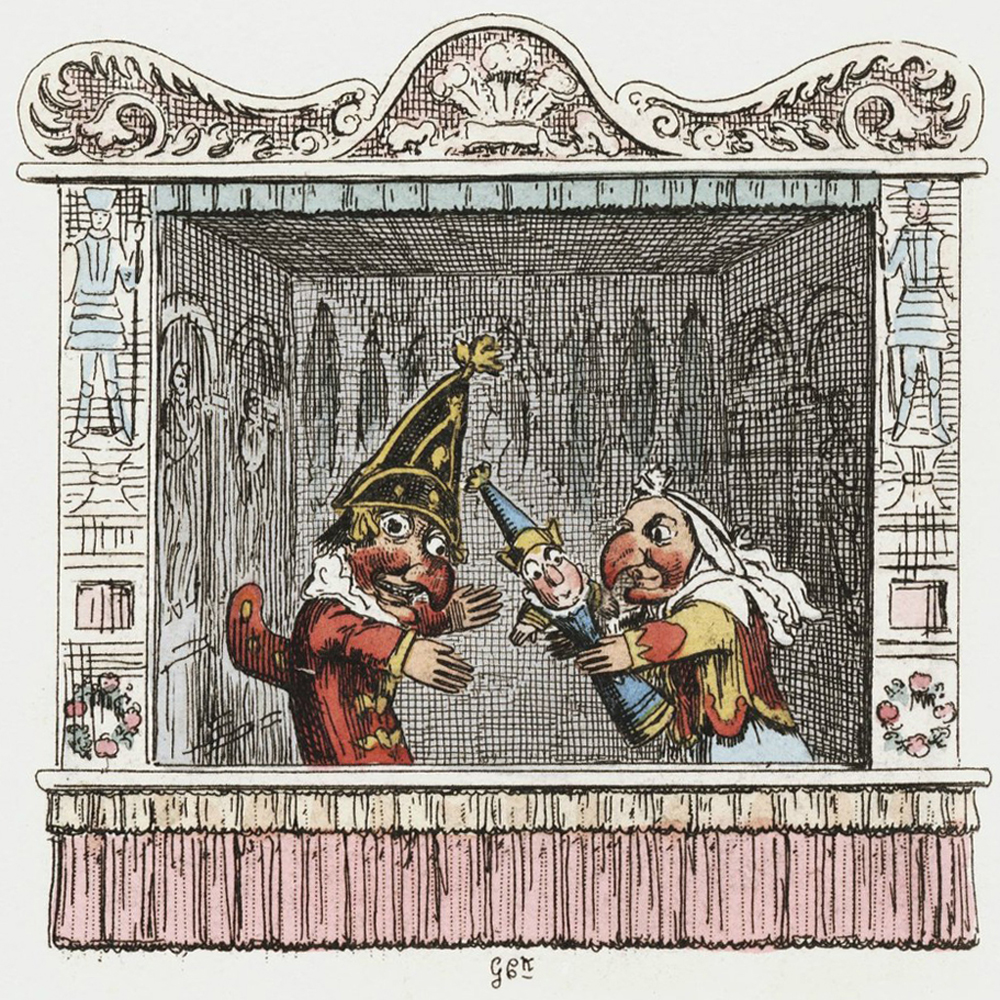
Ilustración del libro Cruikshank.
Placa Su Eaton & Martin Bridle de Covent Garden.
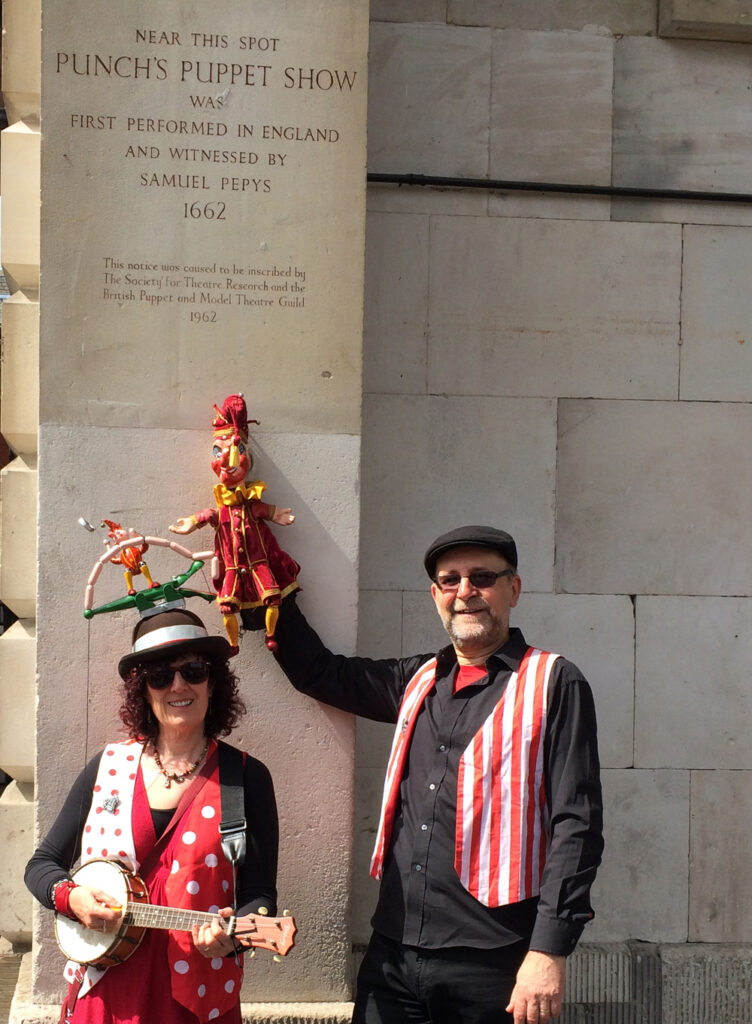
Cómo y por qué me convertí en intérprete:
En la Inglaterra victoriana, en el siglo XIX, las playas se convirtieron en lugares populares de ocio y entretenimiento, y los artistas de Punch and Judy seguían a la multitud desde las plazas del mercado de la ciudad hasta las concurridas ciudades costeras, estableciendo así una tradición en la que nos adentramos. Martin se había criado en un pueblo costero, por lo que estaba familiarizado con esto, y creó su propio espectáculo de marionetas para poder ganarse la vida al aire libre, sin tener que ser empleado por nadie más. Como músico e intérprete, también tenía muchas ganas de ser parte de esto. Lo vimos como una forma de vida romántica: una desviación de una carrera profesional normal y una especie de libertad.
También somos músicos folclóricos, interesados en el arte popular y las costumbres y tradiciones populares, en el arte popular, como el circo y el teatro de variedades, y el espectáculo tradicional Punch and Judy encapsuló todo esto.
Al recaudar dinero de nuestra audiencia, tocando en la calle para ganarnos la vida, teníamos que asegurarnos de que nuestros espectáculos fueran populares, divertidos y entretenidos, para que nuestra audiencia siguiera regresando. También tenían que ser ruidosos, bulliciosos y rápidos para mantener a la audiencia interesada en las ruidosas playas llenas de turistas amantes de la diversión. La voz chillona y estridente del Sr. Punch viajó bien y ayudó a atraer a una multitud.
Estábamos empezando y era un buen campo de entrenamiento.
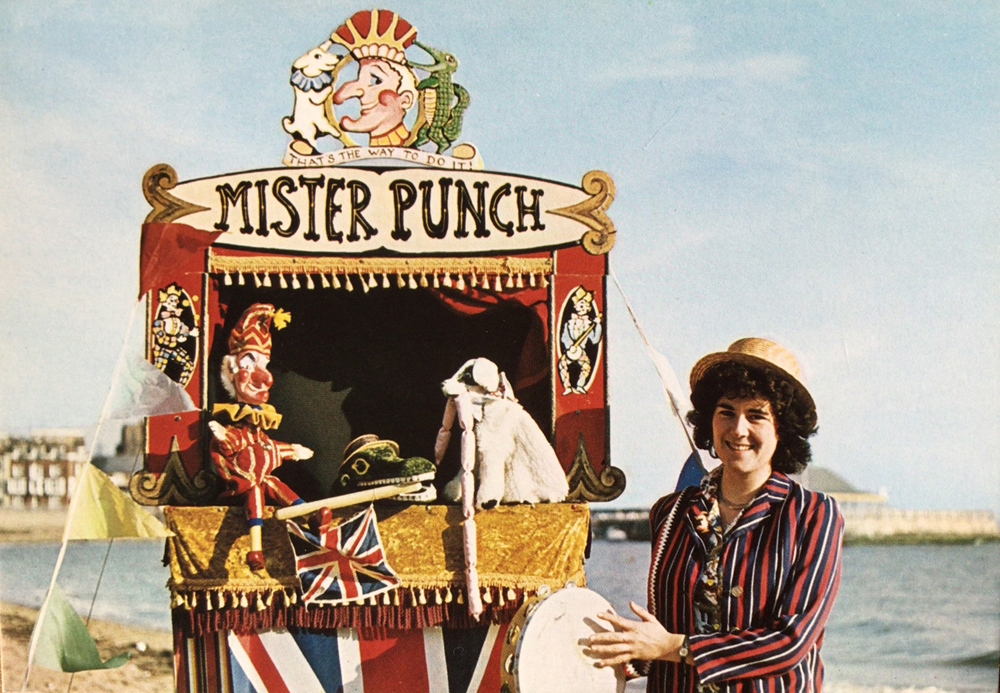
Lo que hago en el programa
Trabajé fuera de la cabina de marionetas y fui la cara pública del espectáculo. Yo era «El embotellador», lo que significaba que recogía el dinero de la audiencia. (Aparentemente, el nombre proviene del dinero que se recolecta en una botella que el show-man rompería al final del espectáculo para contar el dinero, asegurándose de que no se haya sacado dinero). Principalmente, mi audiencia era feliz de contribuir. Si no, intentaría una sonrisa extra o una mirada dura para alejar a los que no pagan. La mayoría de las personas eran agradables, una o dos no tanto.
Además de «Bottling», hice algo de «Barking», lo que significa que encabecé el espectáculo e interactué con los títeres y el público; a veces, mediaba entre ellos traduciendo la voz chillona de Mr. Punch. Puse música y canté, agarré al bebé si lo arrojaban fuera de la cabina de títeres y alenté y ocasionalmente tranquilicé a la audiencia joven.
Antes del espectáculo caminé arriba y abajo de la playa con letreros y tocando una campana para anunciar el espectáculo, y después vendí los recuerdos, las postales, las insignias y los carteles para colorear que habíamos hecho.
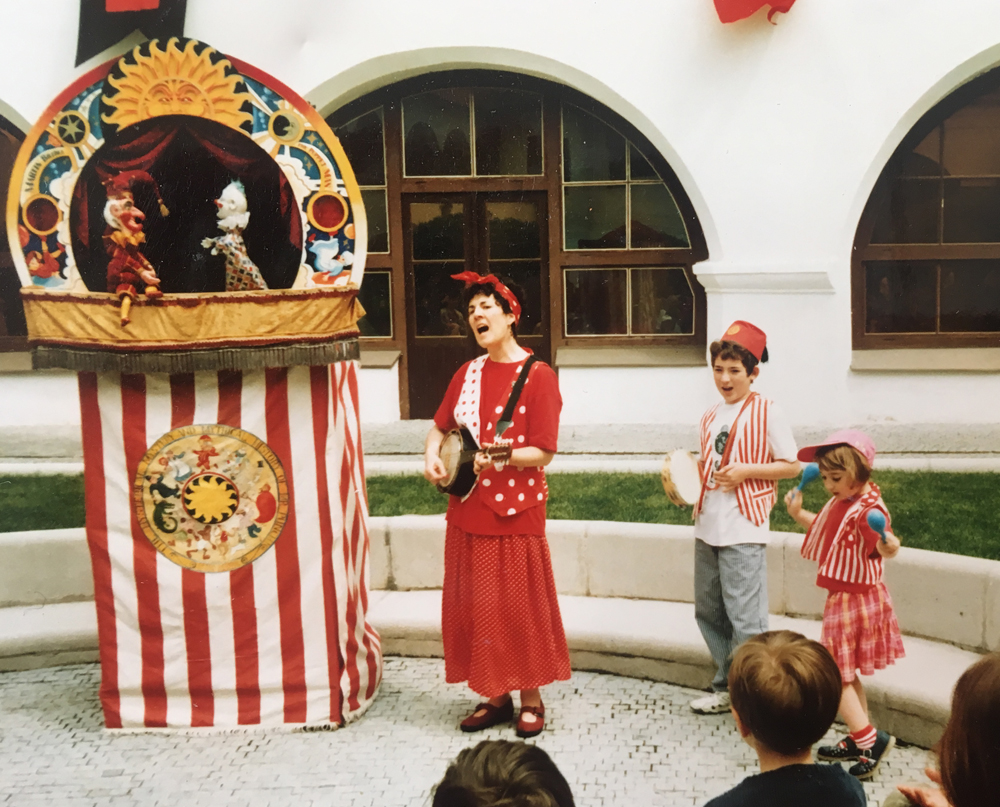
También cuidé de nuestro hijo pequeño mientras actuaba y recogía el dinero en la playa, y a menudo le gustaba participar en los interludios musicales, que eran populares entre nuestra audiencia. Esto continuó cuando también llegó nuestra hijita, aunque ya no trabajábamos en la playa, y a menudo se vestían para combinar con nuestros disfraces y se unían al final del espectáculo.
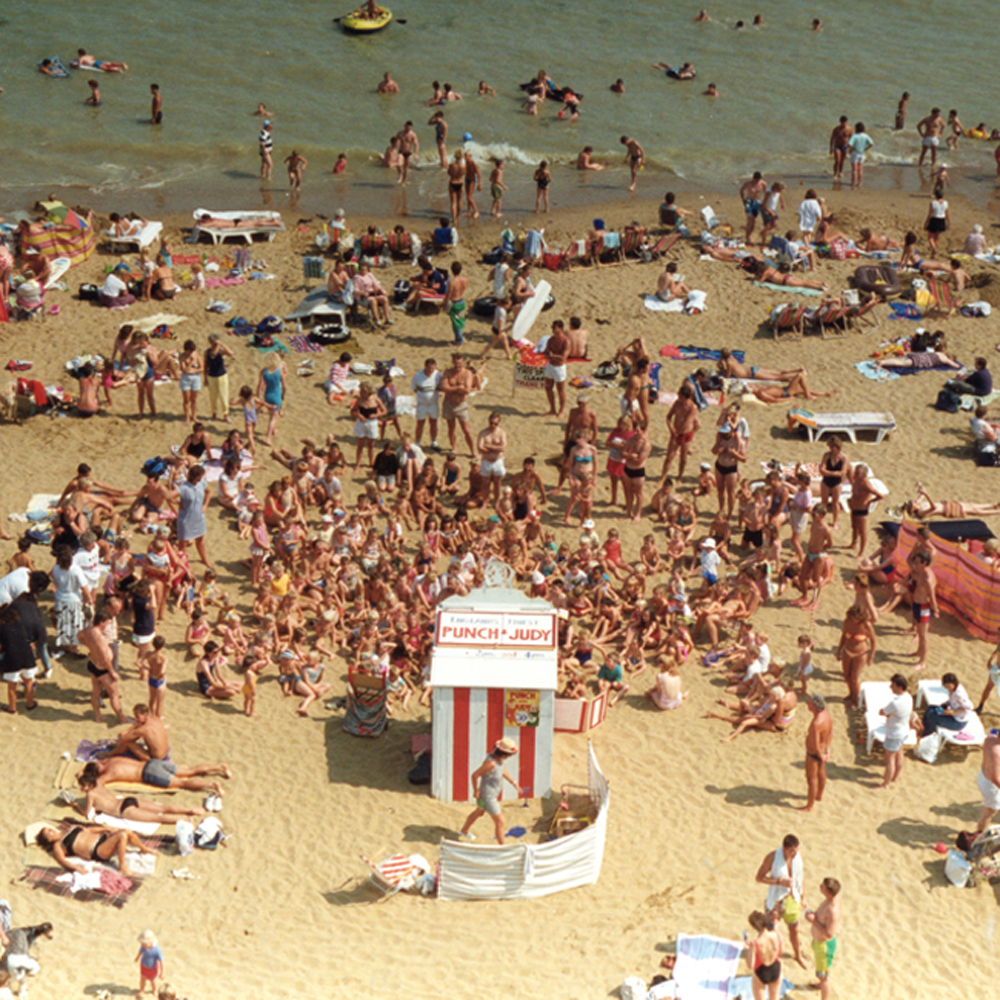
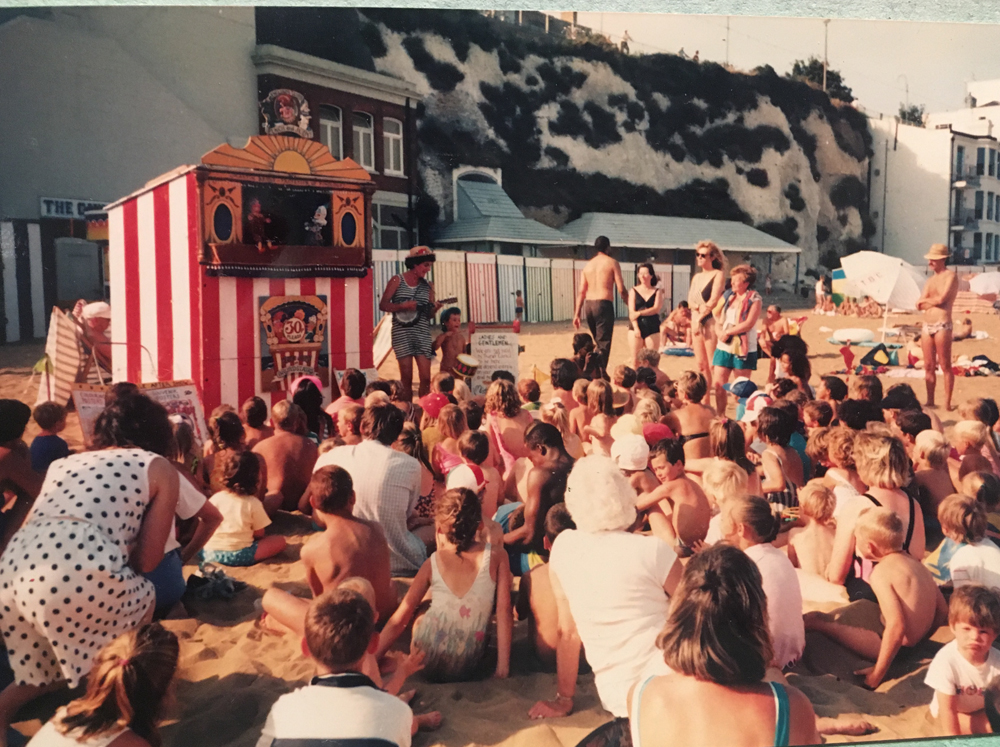
P&J en la playa de Broadstairs
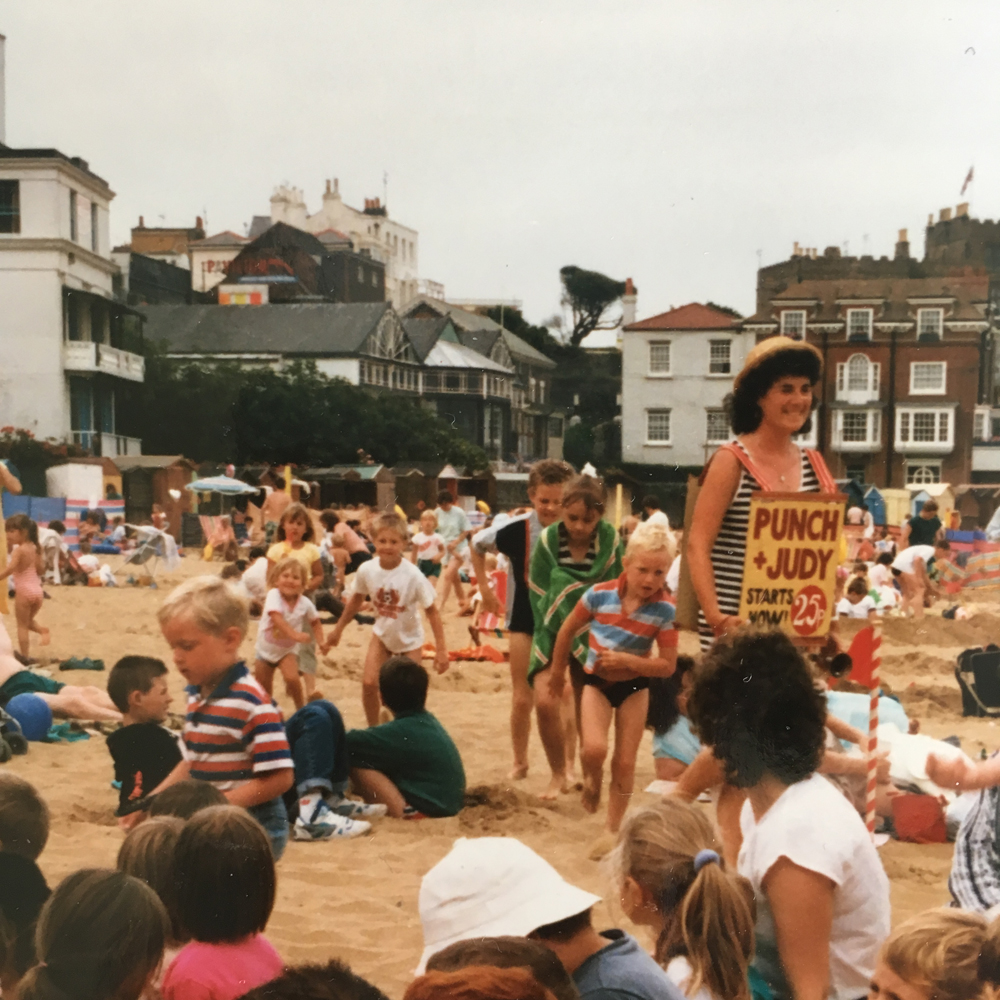
Caminar con letreros
Banda familiar (en Eslovaquia)
Judy y yo.
No soy un artista de clown, soy la cara amistosa entre el espectáculo y la audiencia. El rostro femenino. Creo que mi presencia asegura que el programa sea familiar, divertido y seguro.
Tengo un fuerte recuerdo de cuando era niño y veía un espectáculo de Punch and Judy en la playa y me desconcertaba que Judy tuviera una voz de hombre: la voz del titiritero. Sabía que no era una mujer.
Hay una tradición en el Reino Unido conocida como pantomima. Es diferente a los espectáculos de pantomima de mimo puro de otros países de habla inglesa, aunque también comparte sus raíces con Comme-dia del Arte. Es un espectáculo de teatro interior grande, espectacular y muy popular, siempre en Navidad, y generalmente basado en una historia tradicional conocida como Cenicienta, Aladino o Jack y las habichuelas mágicas, y a menudo está protagonizado por conocidos actores de televisión y celebridades. Sigue un patrón muy particular: el héroe masculino principal, el niño principal, es interpretado por una mujer joven y guapa, y un personaje femenino cómico (por ejemplo, la hermana fea de Cenicienta) es interpretado por un hombre vestido con ropa de mujer. Esta es la Dama de la Pantomima.
Vemos a nuestra Judy como una Dama de la Pantomima: es escandalosa, fuerte, muy divertida y da lo mejor que puede. Éramos conscientes de nuestra audiencia de niños, y queríamos hacerlos reír, no llorar ni sentir miedo, pero también queríamos mantener la energía y el espíritu del tradicional espectáculo. Aprovechar la tradición de la pantomima, también una forma de clown, ayudó.
Teatro Slapstick: hombres contra mujeres:
No puedo hablar por otros artistas, solo conozco nuestra propia situación.
Nuestro espectáculo es musical, absurdo y divertido, lleno de humor visual y chistes ingeniosos. Nuestro objetivo es retratar un espectáculo que sea cómico, enérgico y en la tradición y siempre divertido, pero nunca cruel.
El humor es siempre el foco principal: nos preguntamos «¿Es divertido?» Si la respuesta es “no”, se abandonaría la idea. Somos una pareja y desarrollamos nuestro estilo juntos. El titiritero, Martin Bridle, no es un macho agresivo, y yo soy una mujer, y nuestro propio gusto personal y sensibilidad alimentan cada rutina, mientras tratamos de mantenerlo fiel a la tradición, pero apropiado para el público familiar moderno.
Destacamos que los títeres son de madera. Se mueven de manera viva, pero golpean contra el costado de la cabina contra un tablón para hacer que las cabezas de madera golpeen aún más fuerte. Son marionetas con cabeza de madera, no son reales. Si un títere encuentra un final prematuro, será de una manera ridícula, por ejemplo, siendo engañado en una máquina de salchichas y convertido en salchichas, o enviado volando fuera de la cabina.
Tampoco es un mundo real: como los cuentos de hadas ambientados en un mundo de «érase una vez», el programa Punch and Ju-dy se desarrolla en un tiempo anterior, un otro mundo nostálgico y absurdo.
Nuestro propio interés inicial es nostálgico y romántico, y fuimos influenciados por los programas de comedia y entretenimiento de la televisión de nuestra infancia a principios de la década de 1960. Nuestro programa inevitablemente ha cambiado para reflejar los cambios en la sociedad con referencia a lo que es y no es aceptable en la comedia, una conversación que continúa.
Por ejemplo, hasta mediados del siglo XX, un pequeño perro vivo formaba parte de la actuación, pero en nuestra propia vida hemos visto que esto se vuelve completamente inaceptable en el Reino Unido, por lo que Dog Toby como él sería. conocido es ahora un títere, si es que aparece. Él es una gran característica en la nuestra, de hecho, tenemos dos, padre y cachorro, Old Toby y Young Toby, que presentan el espectáculo de una manera generalmente tonta.
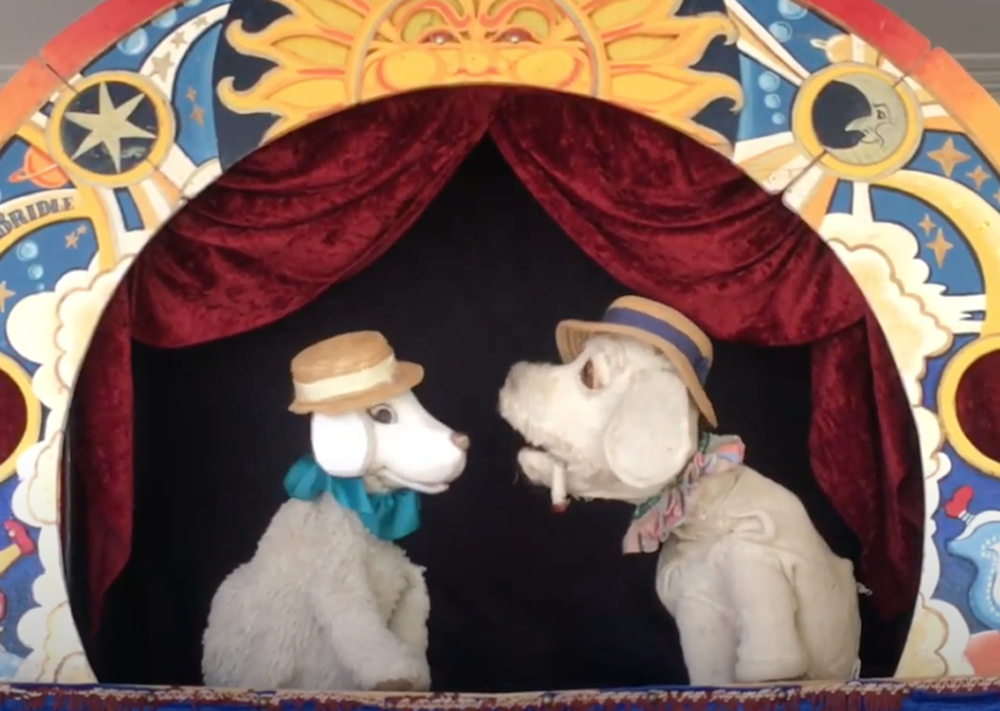
El perro títere Tobys
Cambios en la sociedad:
En la década de 1990, en el Reino Unido, los espectáculos de Punch & Judy se volvieron menos de moda debido a la conciencia de los prejuicios y desequilibrios en varias partes de la sociedad británica. Algunas autoridades locales no contratarían programas de Punch & Judy, aunque seguían siendo populares entre la población en general.
Después de once años como músicos callejeros en la playa, decidimos parar. Sentimos que habíamos llevado el espectáculo tradicional de Punch and Judy lo más lejos que podíamos, y teníamos dos niños pequeños, por lo que creamos otro espectáculo de títeres de guante al aire libre de estilo pastoral, que representamos por una tarifa en eventos rurales y festivales folclóricos en el verano. Parecía un espectáculo tradicional antiguo, aunque no lo era, y era mucho más sutil, incorporando estilos tradicionales y rutinas de payasadas, pero personajes diferentes.
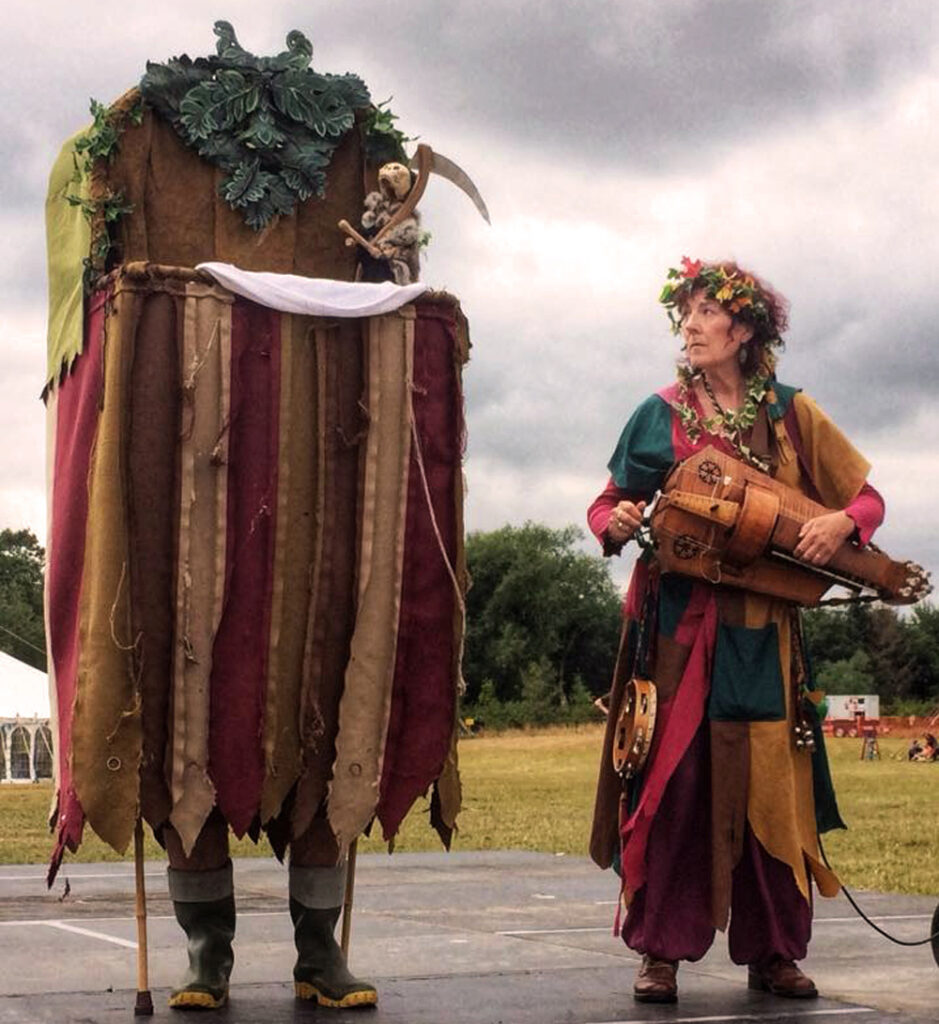
Piggery Jokery.
También trabajamos en escuelas y teatros en el invierno con espectáculos de mayor escala.
Punch and Judy todavía estaba en el repertorio, pero ya no era nuestro enfoque principal. Nos pareció que el espectáculo estaba en su mejor momento ruidoso y anárquico cuando se realizó en esa franja de arena entre la tierra y el mar, con todo su salvajismo y libertad.
Fabricación y diseño:
Como artista visual, me he inspirado en las imágenes de Punch y Judy. Para nuestros espectáculos callejeros en la playa, hice la mayor parte de la escritura de letreros y pinté el arco del proscenio influenciado por el arte de feria y la escritura de letreros tradicional.
Arco del proscenio.
También creé publicidad para el espectáculo y mercadería para la venta.
En 1984, Martin escribió e ilustré «Punch and Judy in the Rain», un libro para niños sobre el mundo imaginario entre los espectáculos cuando llueve en la playa, como sucedía a menudo en los veranos ingleses. Fue publicado por Hamish Hamilton, ahora parte de Pen-guin Books.
La historia muestra las vidas desordenadas entre bastidores de la compañía de repertorio Punch and Judy, en lugar de la historia tradicional. El estilo estuvo influenciado por los grabados en madera victorianos y los periódicos de gran formato.
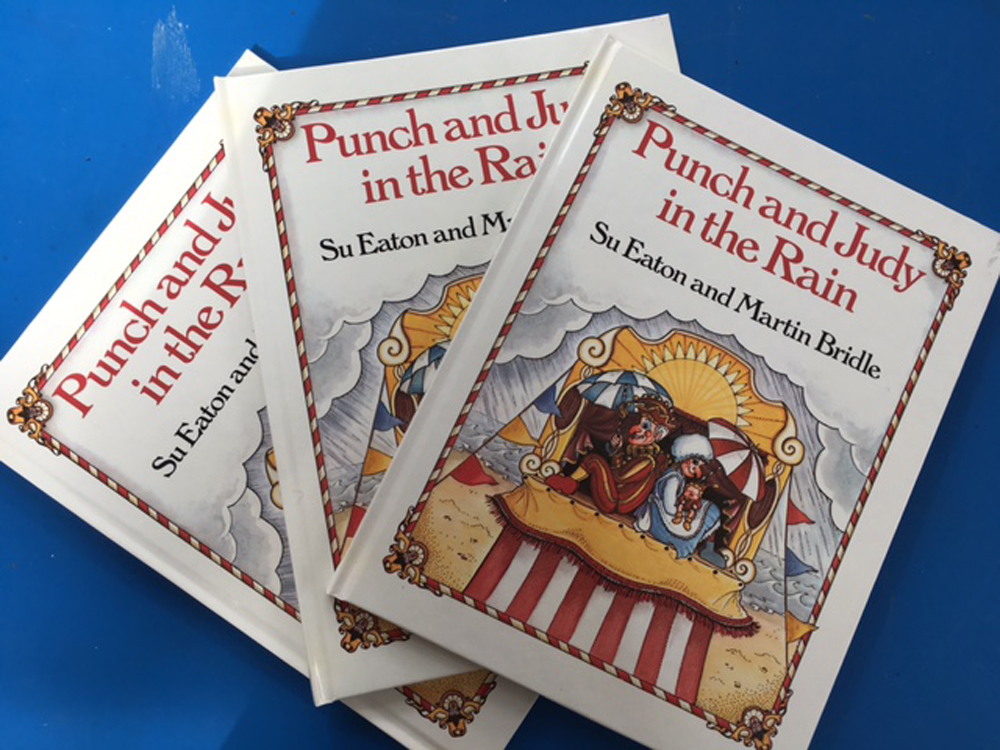
Libros de Punch y Judy bajo la lluvia.
En 1987 ilustré la portada de la revista británica de títeres «Animations» para celebrar el 325 aniversario del espectáculo Punch and Judy.
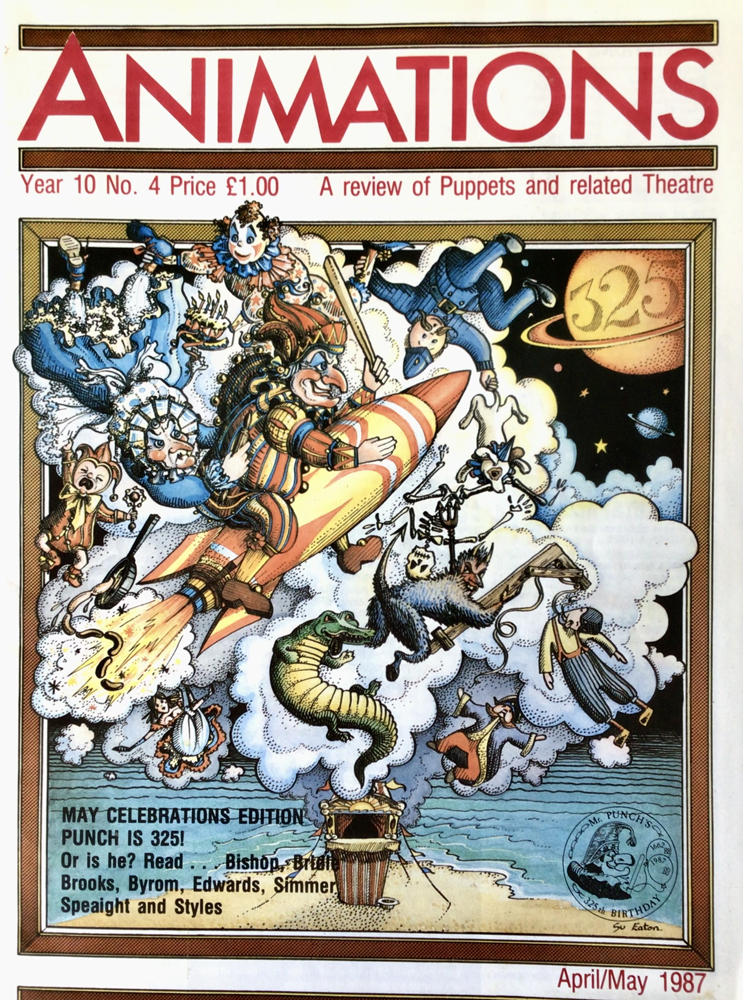
Portada de animaciones 325
Me incliné doblemente para hacer que Punch y Judy bailaran con un disfraz de títere de tamaño natural basado en la Danza Rusa Nanaika, que realizamos regularmente en Covent Garden para el Punch and Judy May Fayre anual.
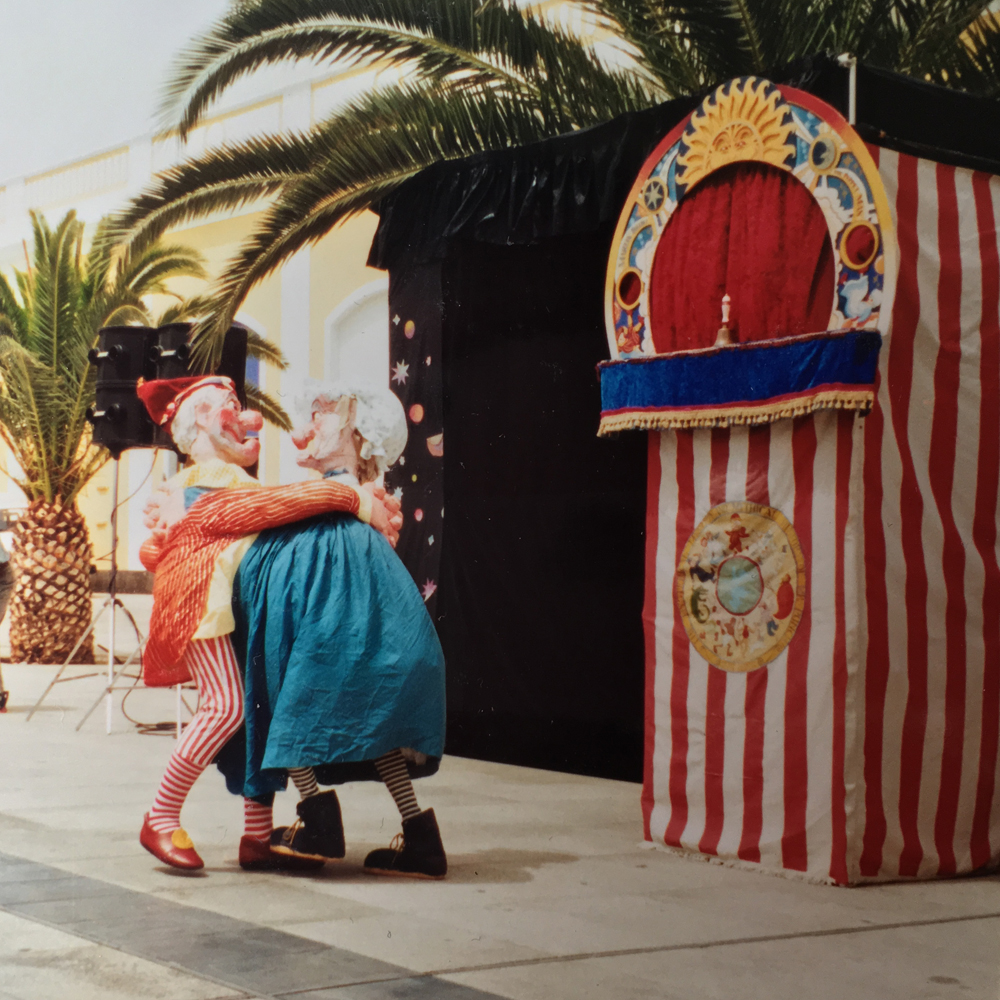
Figuras danzantes.
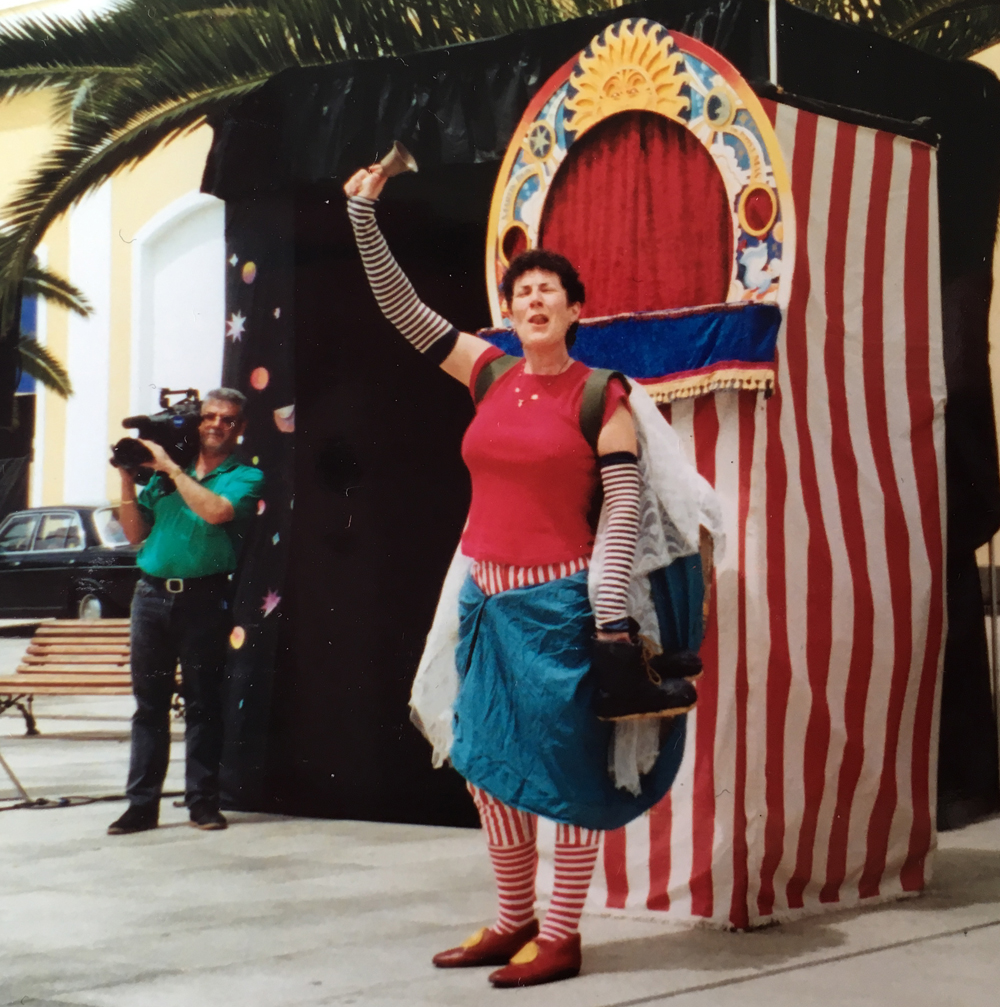
Figuras danzantes reveladas
Sigo actuando con Martin Bridle y recientemente incluí a Punch y Judy como una sección histórica en nuestro espectáculo de teatro infantil «The Mystery of Memory Lane».
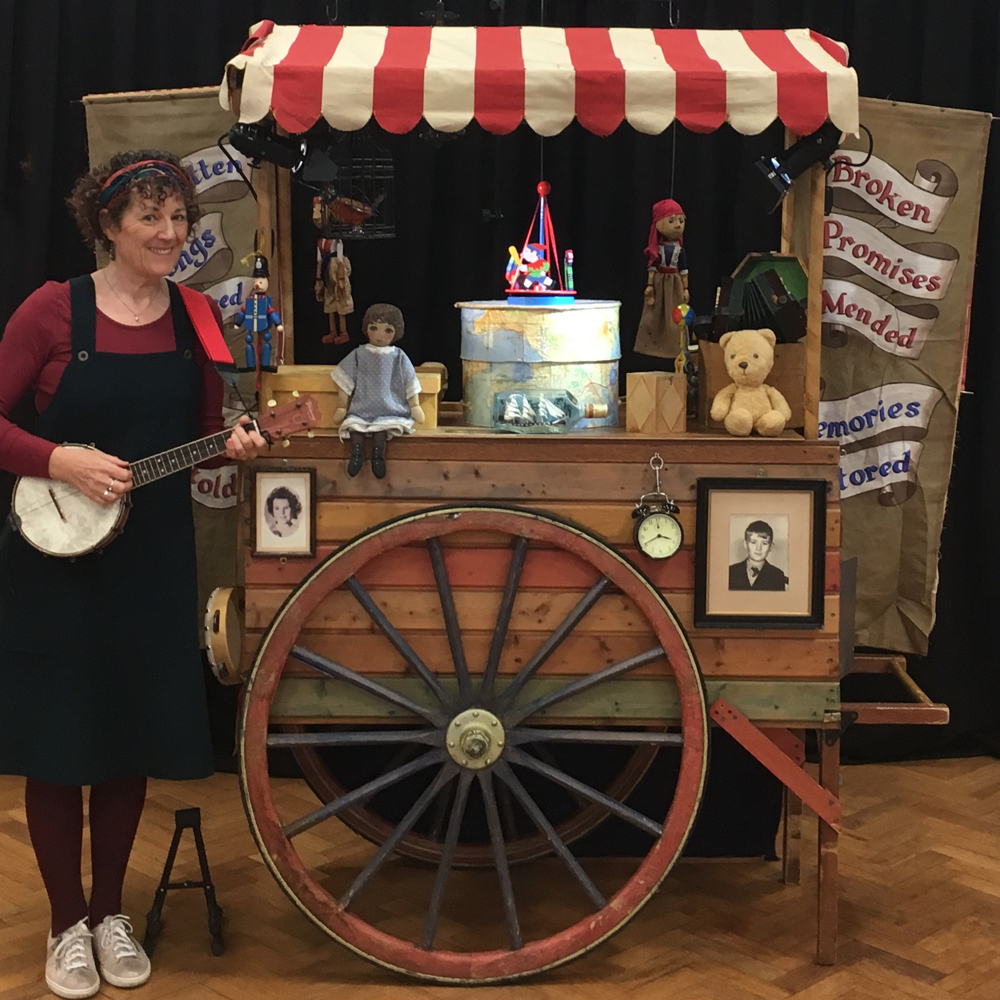
El espectáculo de teatro Mystery of Memory Lane.
Mr Punch y sus primos europeos:
Aunque no hicimos espectáculos de Punch and Judy con mucha frecuencia, a lo largo de los años hemos tenido la suerte de actuar internacionalmente en varios festivales junto a los primos europeos de Mr. Punch, que comparten raíces en la Commedia d’el Arte. El espectáculo Punch and Judy es una tradición ininterrumpida desde 1662 y tiene una gran reputación en estos círculos, a menudo más que en el Reino Unido, donde no es particularmente valorado.
A menudo, Martin hacía estos festivales como solista, pero a veces llevábamos a nuestros hijos con nosotros y actuaban en las partes musicales del espectáculo, enfatizando así la naturaleza familiar.
Mr Punch y sus primos europeos:
Aunque no hicimos espectáculos de Punch and Judy con mucha frecuencia, a lo largo de los años hemos tenido la suerte de actuar internacionalmente en varios festivales junto a los primos europeos de Mr. Punch, que comparten raíces en la Commedia d’el Arte. El espectáculo Punch and Judy es una tradición ininterrumpida desde 1662 y tiene una gran reputación en estos círculos, a menudo más que en el Reino Unido, donde no es particularmente valorado.
A menudo, Martin hacía estos festivales como solista, pero a veces llevábamos a nuestros hijos con nosotros y actuaban en las partes musicales del espectáculo, enfatizando así la naturaleza familiar.
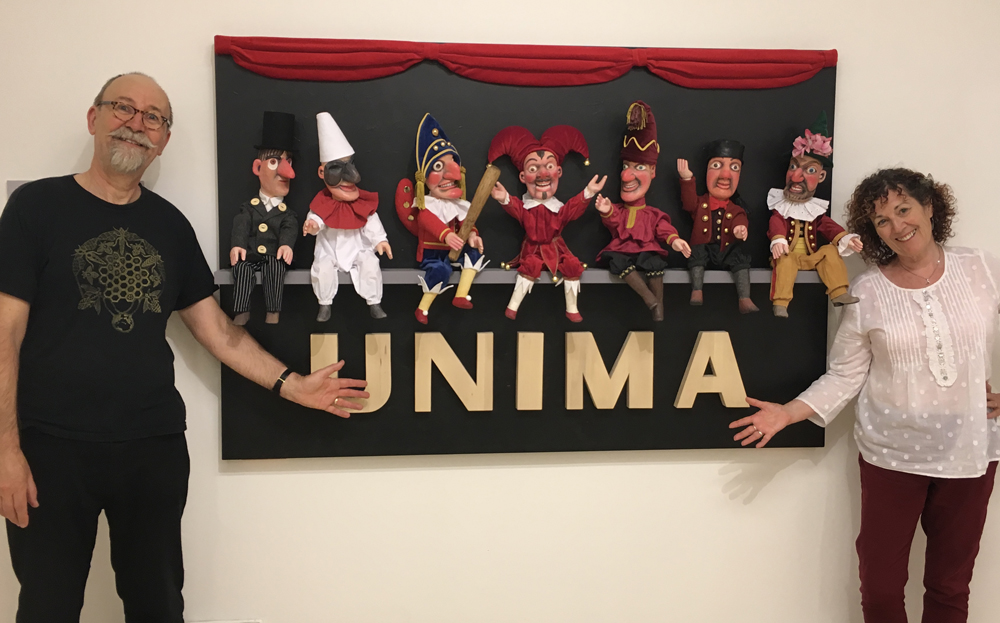
Los primos de Punch. Praga 2019
Nos complació seguir presentando Punch and Judy a nivel internacional en 2019 antes de que la pandemia mundial detuviera todo.
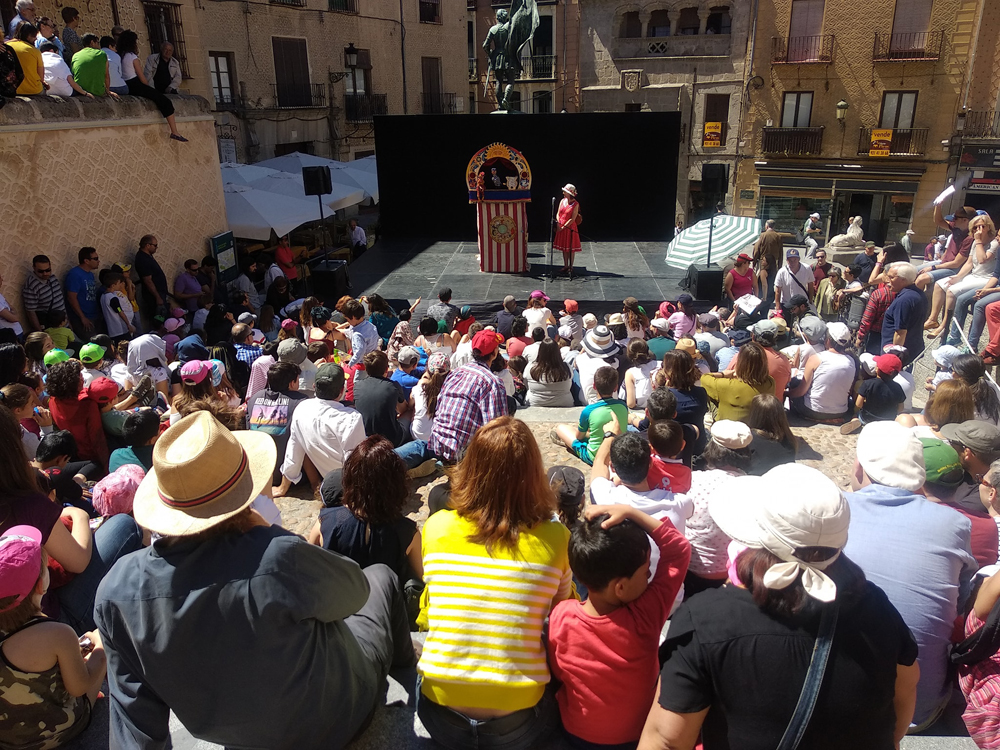
Titirimundi 2019, Segovia
Popularidad en el Reino Unido.
En 2022 en el Reino Unido se estará celebrando el Jubileo de Platino de la Reina Isabel II, 70 años en el trono. Los espectáculos de Punch and Judy tienen demanda para fiestas callejeras y celebraciones. Parece que, a pesar de los cambios de actitud, el programa todavía aprovecha una visión nostálgica de lo británico y es parte de la memoria popular inglesa.
¡Así que sacaremos los títeres de la maleta y lo haremos todo de nuevo!
Short video link: https://vimeo.com/563850064
or https://www.youtube.com/watch?v=w2sfmoy5-pE
Link to video of song I co-wrote for Covent Garden May Fayre 2021 celebrations, featuring Punch and Judy footage, and a small section of female performers. https://youtu.be/khGwntVd9mQ
INTRO: Who I am.
My name is Su Eaton, I am from the UK and have worked as an artist, performer, musician and puppeteer with my partner Martin Bridle, since we left Art College in 1979. We call ourselves Hand to Mouth Theatre and we began our “hand to mouth” existence by busking with our Punch and Judy show on the beaches of South East England. This traditional style show has remained in our repertoire ever since, although it is now a very small part of what we do.
Here are my thoughts about being part of a traditional slapstick style puppet show, in particular as a woman performing in a more commonly male type of comedy.
First I will define the term ‘slapstick’, then discuss the British Punch and Judy tradition, before talking about my experience as a performer.
- What is Slapstick?
The slapstick is a stick made of two strips of wood which makes a loud slapping noise when it hits, so that a light tap seems like a forceful – and comical – slap. It is used to exaggerated comic effect in the traditional Punch and Judy puppet show.
Slapstick Comedy or Slapstick Humour describes a style of comedy, which is visual, physical, and exaggerated, and is named after this stick. It often shows violence and mishaps which would be disastrous in real life, but when presented in such an outlandish, silly and unrealistic way becomes funny instead.
- What is a Punch & Judy show?
The Punch & Judy show is a popular British entertainment – a glove puppet show about a lazy, trickster character called Mr Punch, who uses his slapstick and trickery to thwart the various characters who try to prevent him doing what he wants. Over the centuries different characters have come and gone, but these days a show would usually feature his wife, Judy, and the baby (responsibility), a policeman (authority) a ghost (death) the devil (religion) and somewhat bizarrely a crocodile. Novelty musical and trick-puppetry interludes, and topical characters, are often part of the show too.
It is thought to be a combination of the travelling Italian Commedia del Arte marionette shows and the traditional English glove puppet shows which became popular on the street when theatres were closed in the mid 17th century. The name of Punch is an anglicised and abbreviated version of the Italian Pulcinella – first Punchinella, then Punch.
Mr Punch traditionally speaks through a squeaky reed which the showman has in his mouth, which is called a swazzle, as does the Italian glove puppet Pulcinella.
The diarist Samuel Pepys described seeing a show in Covent Garden market, London, on May 9th 1662, so this is considered to be Mr Punch’s birthday and performers gather annually to commemorate this.
Illustrations: 1. Medieval glove puppet show
2. Cruikshank book illustration.
3.Su Eaton & Martin Bridle by Covent Garden plaque.
- How and why I became a performer:
In Victorian England, the 19th century, beaches became popular places of leisure and entertainment, and the Punch and Judy performers followed the crowds from the city market squares to the busy seaside towns, thus establishing a tradition for us to slip into. Martin had grown up in a seaside town, so he was familiar with this, and created his own puppet show in order to earn a living in the fresh air, without having to be employed by anyone else. As a musician and performer I was keen to be part of this, too. We saw it as a romantic way of life – a diversion from a normal career path and a kind of freedom.
We are also folk musicians, interested in folk art and folk customs and traditions, in popular art, such as circus and variety theatre, and the traditional Punch and Judy show encapsulated all of this.
By collecting money from our audiences – busking for a living – we had to make sure our shows were popular, funny and entertaining, so that our audiences kept coming back. They also needed to be loud and boisterous and quick moving to keep an audience engaged on the noisy beaches full of fun-loving holidaymakers. Mr Punch’s shrill squeaky voice travelled well and helped to attract a crowd.
We were just starting out and it was a good training ground.
Illustration: 4. Postcard, 1982.
- What I do in the show:
I worked outside the puppet booth and was the public face of the show. I was “The Bottler” which meant I collected the money from the audience. (Apparently the name comes from the money being collected in a bottle which would be broken by the showman at the end of the show for the money to be counted, ensuring that no money could have been taken out.) Mainly my audience was happy to contribute. If not, I would try extra smiling, or a hard stare to ward non-payers off. Most people were pleasant – one or two not so much.
As well as “Bottling” I did some “Barking”, that means I fronted the show and interacted with the puppets and the audience – sometimes I mediated between them translating the Mr Punch’s squeaky swazzled voice. I played music and sang, caught the baby if he was thrown out of the puppet booth, and encouraged and occasionally reassured the young audience.
Before the show I walked up and down the beach wearing sign-boards and ringing a bell to advertise the performance, and afterwards I sold the souvenirs, postcards, badges and colouring posters which we had made.
I also looked after our baby son while performing and collecting the money on the beach – and he often like to join in with the musical interludes, which was popular with our audiences. This continued when our baby daughter arrived too, although we were no longer working the beach, and they would often be dressed to match our costumes, and join in at the end of the show.
Illustrations: 5. P&J on Broadstairs beach
6. Walking with Sign boards
7. P&J Beach baby
8. Family band (in Slovakia)
5. Judy and me.
I am a not slapstick performer myself – I am the friendly face between the show and the audience. The female face. I think my presence ensures that the show is family-friendly, funny and safe.
I have a strong memory of being a child watching a Punch and Judy show on the beach and being puzzled by Judy having a man’s voice – the voice of the puppeteer. I knew she wasn’t a woman.
There is a tradition in the UK known as Pantomime. It is unlike the pure mime pantomime shows of other English speaking countries, although it also shares its roots with Commedia del Arte. It is a big, spectacular and very popular indoor theatre show, always on at Christmas, and usually based on a well known traditional story like Cinderella, Aladdin or Jack and the Beanstalk, and it often stars well known TV actors and celebrities. It follows a very particular pattern: the main male hero, the Principle Boy, is played by a good looking young woman, and a comic female character (e.g. Cinderella’s ugly sister) is played by a man in drag (women’s clothes). This is the Pantomime Dame.
We see our Judy as a Pantomime Dame: she is outrageous, strong, very funny and gives as good as she gets. We were aware of our audience of children, and we wanted to make them laugh – not cry or feel frightened, but we also wanted to keep the energy and spirit of the traditional knockabout show. Tapping into the Pantomime tradition, also a slapstick form, helped.
6. Slapstick Theatre: men v women:
I cannot speak for other performers – I only know our own situation.
Our show is musical, absurd, and funny – full of visual knockabout humour and witty jokes. We aim to portray a show which is comical, energetic, and in the tradition and always funny – but never cruel.
Humour is always the main focus – we ask ourselves “Is it funny?” If the answer is “no”, the idea would be abandoned. We are a couple and developed our style together. The puppeteer, Martin Bridle, is not an aggressive macho man, and I am a woman, and our own personal taste and sensitivity feeds into each routine – as we try to keep it true to the tradition, but appropriate to modern family audiences.
We emphasise that the puppets are made of wood. They move in a lively way, but knock against the side of the booth against a slap-board to make the wooden heads whack even more loudly. They are wooden-headed puppets – they are not real. If a puppet meets an untimely end it will be in a ludicrous way – for example, being tricked into a sausage machine and turned into sausages, or sent flying out of the booth.
Nor is it a real world – like fairy tales set in a “once upon a time” world, the Punch and Judy show is set in an earlier time, a nostalgic and absurd other-world.
Our own initial interest is nostalgic and romantic, and we were influenced by the TV comedy shows and entertainments of our childhoods in the early 1960s. Our show has inevitably changed to reflect changes in society with reference to what is and is not acceptable in comedy – a conversation which continues.
For example, up until about the middle of the 20th Century, a small live dog would be part of the performance, but in our own lifetime we have seen this become completely unacceptable in the UK, and so Dog Toby as he would be known is now a puppet if he appears at all. He is a big feature in ours, in fact we have two, father and puppy, Old Toby and Young Toby, who introduce the show in a generally daft manner.
Illustration: 9. Puppet Dog Tobys
7. Changes in society:
In 1990s in the UK Punch & Judy shows became less fashionable with an awareness of prejudice and imbalance in various parts of British society. Some local authorities would not book Punch & Judy shows, although they remained popular amongst the population in general.
After eleven years as buskers on the beach we decided to stop. We felt we had taken the traditional Punch and Judy show as far as we could, and had two young children, so we created another pastoral style outdoor glove puppet show, which we performed for fees at rural events and folk festivals in the summer. It looked like an ancient traditional show, although it wasn’t, and was much more subtle, incorporating traditional styles and slapstick routines, but different characters.
Illustration: 10. Piggery Jokery.
We also worked in schools and theatres in the winter with larger scale shows.
Punch and Judy was still in the repertoire but no longer our main focus. It seemed to us that the show was at its noisy, anarchic best when performed on that strip of sand between the land and the sea – with all its wildness and freedom.
8. Making and designing:
As a visual artistI have been inspired by Punch and Judy imagery. For our beach busking shows I did a most of the sign writing, and painted the proscenium arch influenced by fairground art and traditional signwriting.
Illustration: 11. Proscenium Arch.
I also created publicity for the show and merchandise for selling.
In 1984 Martin wrote and I illustrated “Punch and Judy in the Rain”, a children’s book about the imaginary world in between the shows when it is raining on the beach – as it often was in an English summer. It was published by Hamish Hamilton, now part of Penguin Books.
The story shows the haphazard backstage lives of the Punch and Judy repertory company, rather than the traditional story. The style was influenced by Victorian woodcuts, and broadsheets.
Illustration: 12. Punch and Judy in the Rain books.
In 1987 I illustrated the cover for the British puppetry magazine “Animations” to celebrate the Punch and Judy show’s 325th anniversary.
Illustration: 13. Animations cover 325
I bent myself double to make Punch and Judy dance in a lifesize puppet costume based on the Russian Nanaika Dance, that we regularly performed at Covent Garden for the annual Punch and Judy May Fayre!
Illustration. 14. Dancing Figures.
15. Dancing Figures revealed
I continue to perform with Martin Bridle and have recently included Punch and Judy as a historical section in our children’s theatre show “The Mystery of Memory Lane”.
Illustration. 16. The Mystery of Memory Lane theatre show.
- Mr Punch and and his European cousins:
Although we didn’t do Punch and Judy shows very often, over the years we have lucky enough to perform internationally at various festivals alongside Mr Punch’s European cousins, who share roots in the Commedia d’el Arte. The Punch and Judy show is an unbroken tradition since 1662, and is held in high repute in these circles – often more so than in the UK, where it is not particularly valued.
Often Martin did these festivals as a solo act, but sometimes we took our children with us and they performed in the musical parts of the show, thus emphasising the family-friendly nature.
Illustration: 17.Punch’s cousins. Prague 2019
We were pleased to still be performing Punch and Judy internationally in 2019 before the global pandemic stopped everything.
Illustration: 18. Titerimundi 2019, Segovia
10. Popularity in UK.
In 2022 in the United Kingdom will be celebrating Queen Elizabeth II’s Platinum Jubilee, 70 years on the throne. Punch and Judy shows are in demand for street parties and celebrations. It seems that despite changing attitudes the show still taps into a nostalgic view of Britishness, and is part of the English folk memory.
So we will take the puppets out of the suitcase and do it all again!
- Short video link: https://vimeo.com/563850064
or https://www.youtube.com/watch?v=w2sfmoy5-pE
- Link to video of song I co-wrote for Covent Garden May Fayre 2021 celebrations, featuring Punch and Judy footage, and a small section of female performers. https://youtu.be/khGwntVd9mQ